
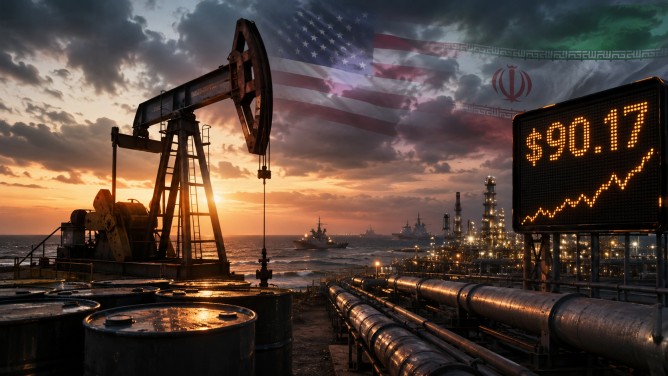
Global oil prices have surged following the end of a two-month period dedicated to negotiations between the United States and Iran, which concluded without reaching a peace agreement. The lack of resolution has sparked concerns about the potential continuation of the conflict and its impact on global energy supplies. Brent crude oil prices have risen above $90 per barrel, hitting approximately $91.63, marking their highest point since July 30. This price hike follows recent demands by U.S. President Donald Trump for Iran to capitulate, accompanied by his warnings that the situation could escalate if diplomatic measures fail.
The strategic Strait of Hormuz, a vital passageway for global oil shipments, has seen a noticeable decline in the number of commercial vessels traversing its waters. This reduction has exacerbated worries about sustained disruptions to the supply of oil. Iran has suggested that it may take a more assertive military approach should the talks collapse, and reports of an attack on a cargo ship passing through the strait have further fueled anxieties regarding the safety of maritime operations in this critical region.
As a result of these developments, investors are bracing for the possibility of extended disturbances in oil supply chains. The prospect of a prolonged closure or a decrease in movement through the Strait of Hormuz threatens to exert additional upward pressure on crude oil prices. This situation underscores the fragility of global energy markets amid geopolitical tensions.
Analysts are cautioning that the ongoing conflict in the Middle East, coupled with the persistent war in Ukraine, could lead to further volatility in global energy markets. The combination of these factors is likely to drive oil and gas prices higher, underscoring the interconnectedness of geopolitical events and their potential to disrupt worldwide economic stability.