
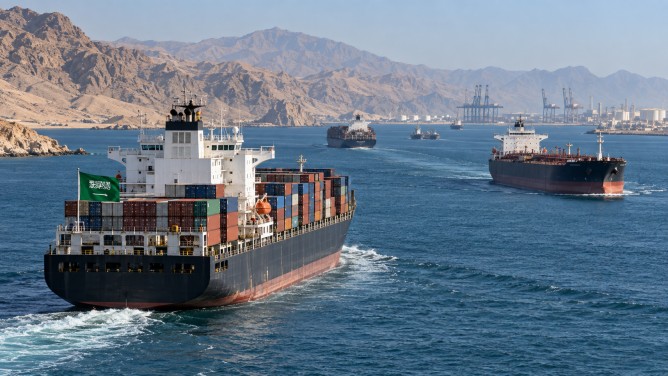
Saudi Arabia has highlighted the critical need for safeguarding major Middle Eastern waterways to ensure global energy security, urging international collaboration to maintain freedom of navigation in these strategic routes. During a speech at the United Nations General Assembly, Saudi Foreign Minister Faisal bin Farhan emphasized the importance of keeping the Strait of Hormuz, the Bab al-Mandab Strait, the Red Sea, and the Gulf of Aden accessible to international shipping.
Bin Farhan specifically called for the Strait of Hormuz to revert to conditions prior to February 28, advocating against the imposition of additional fees or taxes on vessels traversing this vital passage. He stressed that these strategic waterways should not be used as leverage for political coercion or threats, underlining the necessity of protecting maritime navigation in line with international law and United Nations resolutions.
The significance of the Strait of Hormuz and Bab al-Mandab lies in their role as conduits for global oil and gas shipments. Any disruptions in these channels could have far-reaching implications for energy supplies and international trade. The Saudi remarks come amid persistent tensions involving Iran, the United States, and Israel, compounded by attacks and disruptions in maritime activities linked to the Iran-backed Houthi movement in the Red Sea region.
Saudi Arabia’s call to action reflects broader concerns over stability in the region’s waterways, which are integral to the global economy. The kingdom’s stance underscores the shared interest among nations to preserve open and secure shipping lanes in this geopolitically sensitive area.