
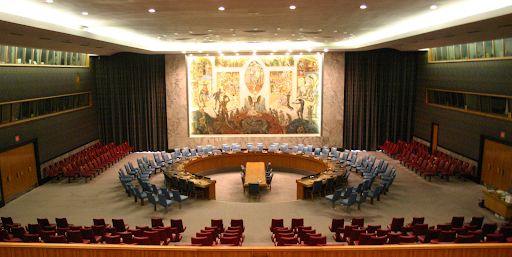
In a move that underscores the continued influence of American policy on the global stage, the UN Security Council adopted a resolution on Monday that is almost entirely based on President Donald Trump’s 20-point plan for Gaza. The resolution attempts to synthesize the competing demands of security and sovereignty, but it is built on a foundation of contradictions that may doom it to failure. While the US delegation celebrated the passage of the US-drafted plan, the actual terms—specifically the promise of a “pathway to statehood” and the mandate for an “International Stabilization Force”—have been rejected by the key players on the ground, creating a disconnect between diplomatic theory and military reality.
The inclusion of the “statehood” clause was a calculated diplomatic maneuver designed to win over the Palestinian Authority and prevent the resolution from being torpedoed by a Russian veto. It was presented as a conditional offer, a political horizon for the Palestinian people. However, this inclusion was met with immediate hostility from the Israeli government. Prime Minister Benjamin Netanyahu, whose cooperation is essential for any implementation, publicly rebuked the idea, restating his firm opposition to a Palestinian state. This rejection by Israel creates a significant hurdle, as the “carrot” meant to bring Palestinians to the table is being denied by the occupying power.
On the security front, the resolution endorses a hardline approach to demilitarization, authorizing an international force to destroy military infrastructure and seize weapons. This aspect of the plan is drawn directly from the US desire to neutralize threats to Israel. However, Hamas responded with fierce defiance. Labeling the plan a form of “international guardianship,” the militant group stated clearly that it “will not disarm.” This sets up an inevitable collision between the proposed stabilization force and Hamas fighters, transforming a peacekeeping mission into a potential enforcement operation with high risks of casualties.
Despite these fundamental disagreements, American officials hailed the vote as a major victory. Ambassador Mike Waltz spoke of the resolution as a necessary tool to “dismantle Hamas’ grip” and build a “prosperous and secure” Gaza. President Trump, positioning himself at the center of the post-conflict order, called the vote “historic” and announced he would chair the “Board of Peace” for reconstruction. The US administration is projecting a vision of success where American leadership cuts through the deadlock, even as the parties involved signal their refusal to comply.
The vote also highlighted a fracture within the Security Council itself. Russia and China chose to abstain rather than veto, a move that allowed the resolution to pass but signaled their deep reservations. They protested the lack of a central UN role, arguing that the plan effectively hands over the keys to the region to the United States. Russian Ambassador Vasily Nebenzya warned that the council was giving up “complete control” to a specific national initiative. The result is a plan that lacks the unified moral authority of the Council, is rejected by Hamas, opposed by Israel, and viewed with suspicion by other world powers.