
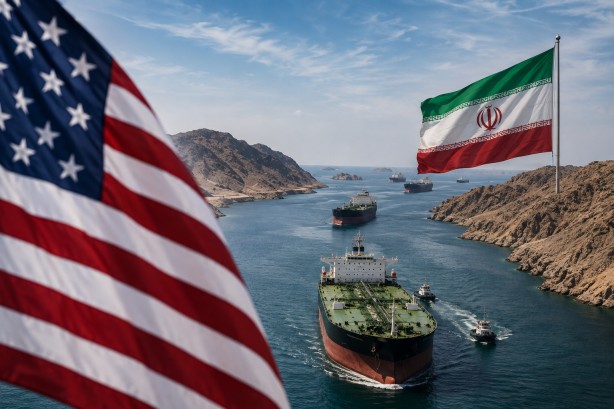
Efforts to ease tensions in the Middle East appear to be gaining momentum as the United States reports progress in negotiations with Iran to reopen the Strait of Hormuz. According to US Treasury Secretary Scott Bessent, discussions with Tehran are advancing positively, with a potential agreement anticipated within the next few days. Bessent expressed optimism about reaching a resolution soon, stating that the plan includes allowing commercial vessels to navigate the crucial waterway toll-free, thereby ensuring the freedom of navigation.
Qatar, a pivotal mediator in these talks, has confirmed that a de-escalation framework is being reviewed by the involved parties as diplomatic efforts intensify. The Strait of Hormuz is a vital channel for the transportation of global oil and energy supplies, and its closure has led to significant disruptions due to escalating regional tensions. The prospect of an agreement has already influenced global oil markets, pushing prices down, with analysts predicting further decreases should regular shipping activities resume.
President Donald Trump recently indicated that he had delayed planned military actions against Iran to provide room for these negotiations. He emphasized that any forthcoming agreement must ensure the reopening of the Strait of Hormuz and address concerns regarding Iran’s nuclear activities. The backdrop to these negotiations includes a previous US-Iran accord aimed at reopening the strait, which fell apart due to disagreements over shipping routes, subsequently heightening tensions once more.
The current talks aim to overcome these past hurdles by establishing a new agreement that would not only restore maritime traffic but also contribute to reducing the instability plaguing the region. As the discussions continue, all parties involved are working towards a solution that balances strategic interests with the need for peace and stability in a region critical to the global economy.