
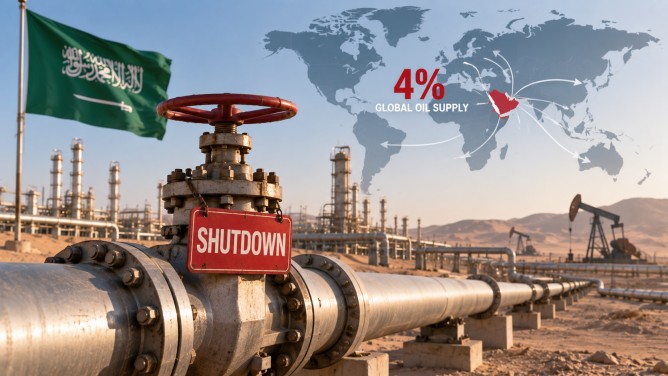
Saudi Arabia has momentarily halted operations of its significant East-West oil pipeline due to an attack, prompting apprehensions over the stability of global crude oil supplies. Meanwhile, the strengthening presence of Iran-backed Houthi forces along Yemen’s Red Sea coast poses additional threats to the regional oil shipment routes. This development is particularly troubling as the Houthis have been advancing their control along the Red Sea and near the Bab el-Mandeb Strait, a crucial maritime passage that links the Red Sea with the Gulf of Aden, thereby heightening security concerns for oil transportation.
The East-West pipeline, which spans 1,200 kilometers, was shut down by Saudi Arabia on September 12 as a preventive measure following an assault the previous day. This pipeline plays a vital role in Saudi Arabia’s oil logistics by facilitating the transfer of crude from its eastern oil-producing areas to the Red Sea. This route serves as an alternative for exporting oil when the Strait of Hormuz, another critical passage, faces disruptions. The recent attacks add to the challenges facing the kingdom’s capacity to deliver crude to global markets, especially after it had increased exports through Red Sea facilities due to previous interruptions in the Strait of Hormuz amid the US-Iran tensions.
Market analysts have indicated that a prolonged shutdown of the pipeline could significantly impact global oil supplies. The potential for disruption is particularly alarming as Brent crude prices have already surged past the $100 per barrel mark amid rising tensions in the Middle East. If both the Strait of Hormuz and the Bab el-Mandeb Strait continue to face disruptions, it could lead to broader repercussions, affecting global energy supplies, increasing transportation costs, and further elevating crude prices.
Rising oil prices have the potential to spur inflation worldwide by increasing costs related to fuel, transportation, and production. This situation could place additional strain on economies that are heavily dependent on imported energy, affecting their trade balances and currencies. The extent of the impact on global oil supplies and energy markets will largely depend on the duration of the pipeline shutdown and the evolving security dynamics around the Red Sea and Strait of Hormuz.